
The Case Against the Reprisal
The Collini CaseThe trial tests whether Meyer’s wartime orders can be defended as lawful reprisal or must be understood as cruel participation in mass killing.
increasing Bearing strength in each event
 decreasing
Bearing strength in each eventdecreasingThe Retaliation Claim
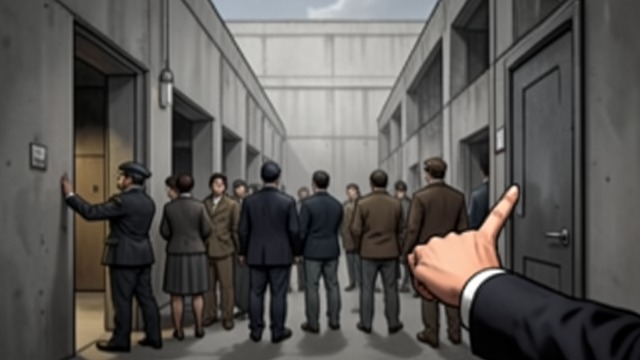
The Retaliation Claim
Legal conditions
Dr Schwan explains that wartime reprisal killings were sometimes treated as permissible under narrowly defined conditions. Restrictions included the victims, the manner of killing, and efforts to find actual attackers.
A dangerous framework
Mattinger uses this account to argue that the execution may have met the law of its time. The testimony raises the difference between an accepted legal category and the suffering it contains.
The Ratio Question

The Ratio Question
Counting lives
Mattinger asks whether a one-to-ten reprisal ratio was excessive. Schwan cannot give a definitive answer, but says it would probably have been regarded as legitimate under the cited standards.
Arithmetic and accountability
The exchange shows how proportionality can make civilian deaths appear administratively manageable. The law’s attempt to constrain violence can also supply language for defending it.
The Pit and the Victims
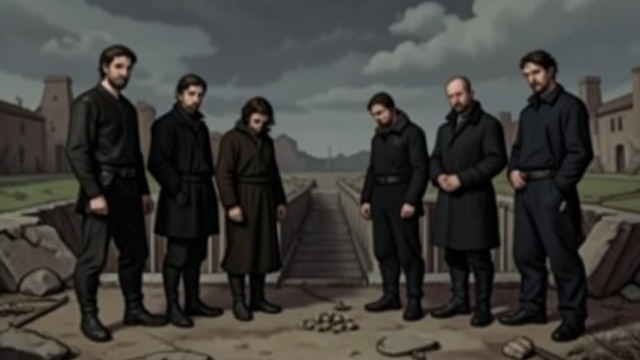
The Pit and the Victims
The manner of death
Leinen emphasizes that the prisoners were unblindfolded, saw earlier victims, and waited through the execution of others. Schwan explains that later courts might view the method as cruel.
Historical judgment shifts
A procedure once defended through wartime rules can look different after changing public and legal understanding. The evidence makes the victims’ experience central rather than incidental.
The Untried Commander
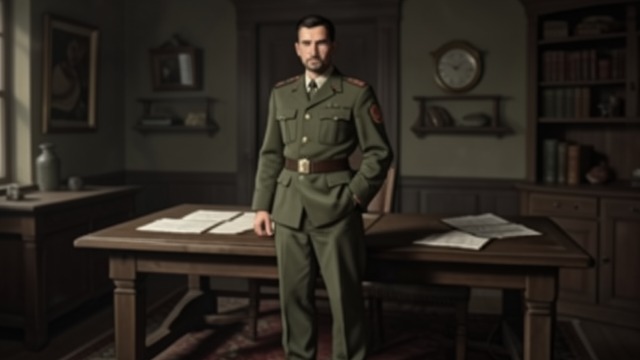
The Untried Commander
No judicial finding
The court learns that Meyer was never charged or questioned over the executions. The earlier proceedings were discontinued, but the reason is not a finding that the killings were lawful.
Legal protection without exoneration
The absence of prosecution leaves Meyer’s conduct unresolved in court. The distinction between a case ending and guilt being adjudicated becomes crucial to the present trial.
Justice After the Fact
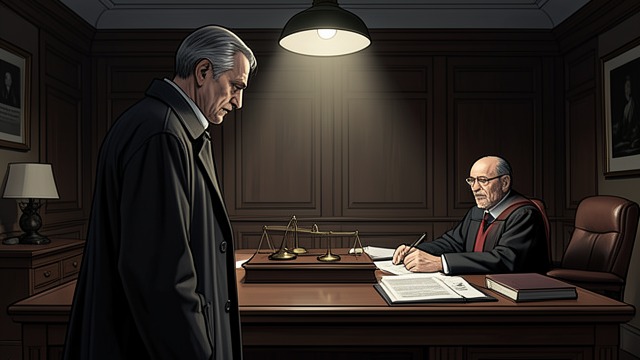
Justice After the Fact
A changed standard
Schwan says contemporary courts might classify Meyer as an accessory to murder, while acknowledging that the limitation rule would still protect him from prosecution.
An unresolved moral verdict
The trial cannot undo the old legal closure, but it can expose its consequences. The case asks whether later generations may name cruelty even when criminal law can no longer punish it.
During Mattinger’s questioning of Dr Schwan
The same expert testimony
During Leinen’s follow-up examination
After the archival records are introduced
The closing hearings
